
News
Sakura Hotel News2026/01/05
Happy New Year! First Hatsumode Experience at Nezu Shrine Near Sakura Hotel Nippori
We hope that this year brings good health and happiness to you and your loved ones.
For the New Year, we invited Mario from Argentina—a guest staying at Sakura Hotel Nippori—to experience Hatsumode, Japan’s traditional first shrine visit of the year. Together, we walked to Nezu Shrine, one of the oldest shrines in the Yanaka area, and explored everyday Tokyo through Mario’s fresh perspective.
From hesitating at the torii gate to discovering how buses work in Tokyo, the walk was full of cultural surprises and laughter. The journey continued through Ueno, ending with a peaceful moment at Shinobazu Pond, where modern skyscrapers and nature meet.
This real guest experience shows how staying at Sakura Hotel Nippori makes local sightseeing and cultural discovery easy and unforgettable.
Cultural Differences at a Japanese Shrine
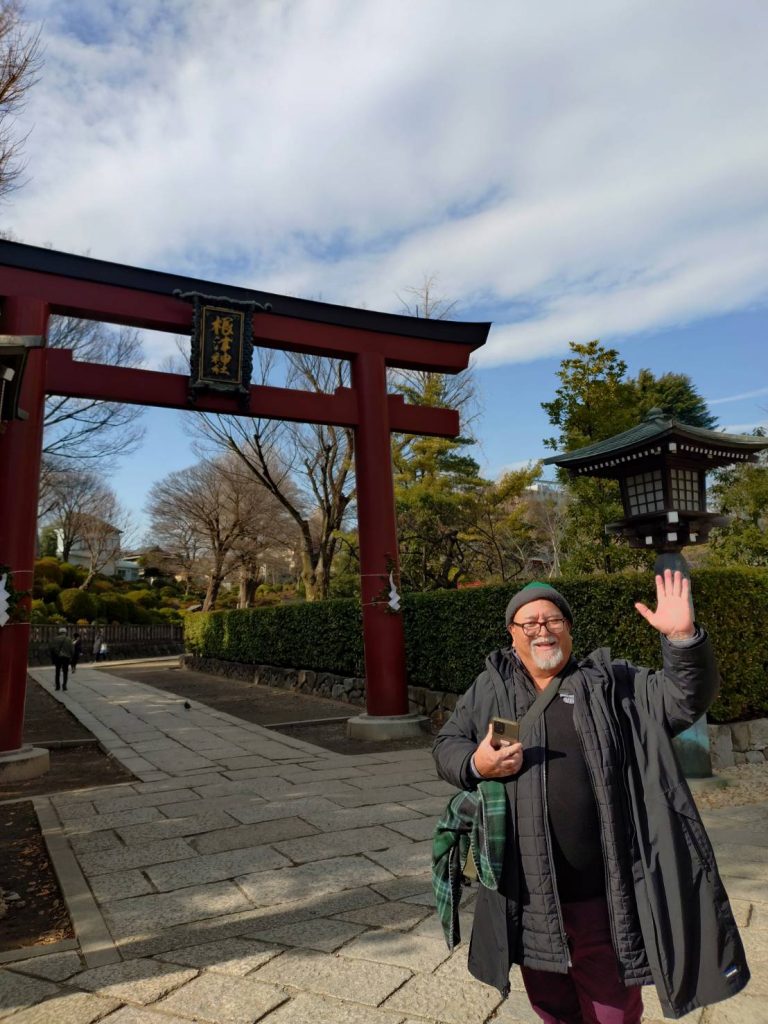
About a 15-minute walk from Sakura Hotel Nippori, Nezu Shrine is one of the oldest Shinto shrines in the Yanaka, Nezu, and Sendagi area—often called the “Yanesen” district. Every May, its famous azalea festival attracts many visitors, and in September, the grand annual festival takes place. Every other year, the portable shrine parade passes through the neighborhood, and we at Sakura Hotel proudly carry the mikoshi together with our guests.
Standing cheerfully in front of the large torii gate, Mario looked ready to enter the shrine—
or so we thought.
Suddenly, he froze and refused to move.
“What’s wrong, Mario?”
“Well… in Argentina, walking under a ladder is considered very bad luck,” he said.
“Can I skip this part?”
Skip it!?
But this is the main entrance… and a ladder!?
We hurriedly explained that a torii gate is not a ladder, and after some convincing, Mario agreed to enter. Still, he seemed uncomfortable with the horizontal beam above his head and carefully squeezed through the narrow space beside the torii instead.
Discovering Beauty in the Shrine Grounds
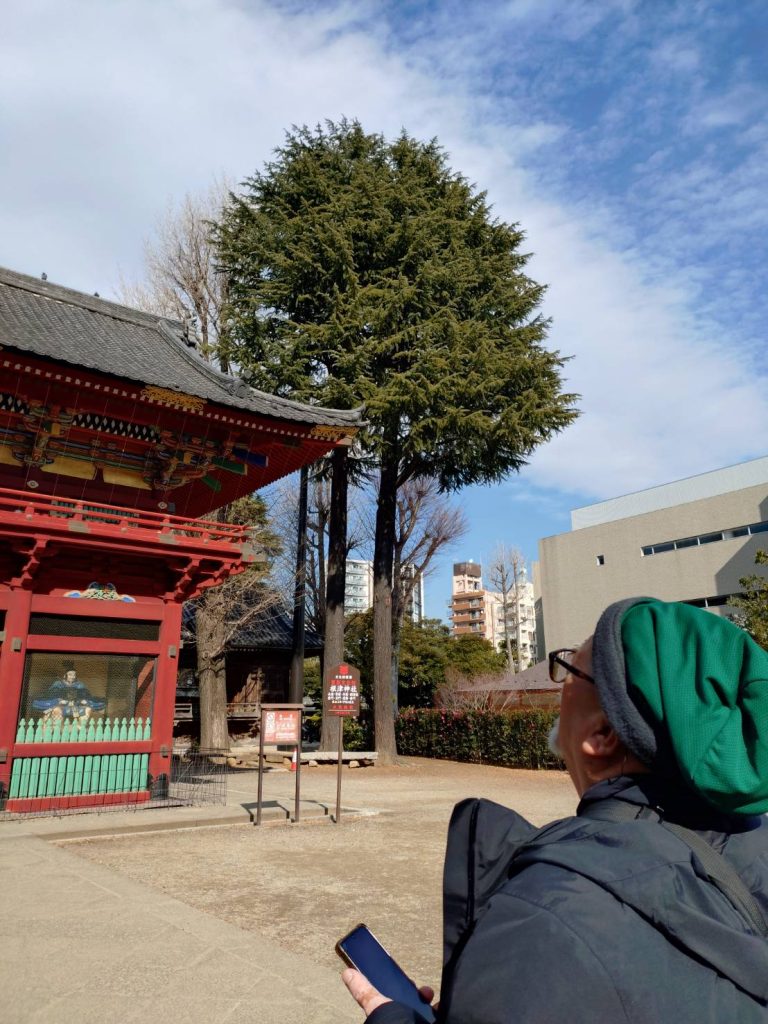
Once inside the shrine grounds, Mario looked up at the tiled roof.
“What an incredible roof!” he said.
“Are those tiles fixed with bolts?”
“They’re so perfectly aligned without any bolts—it’s unbelievable!”
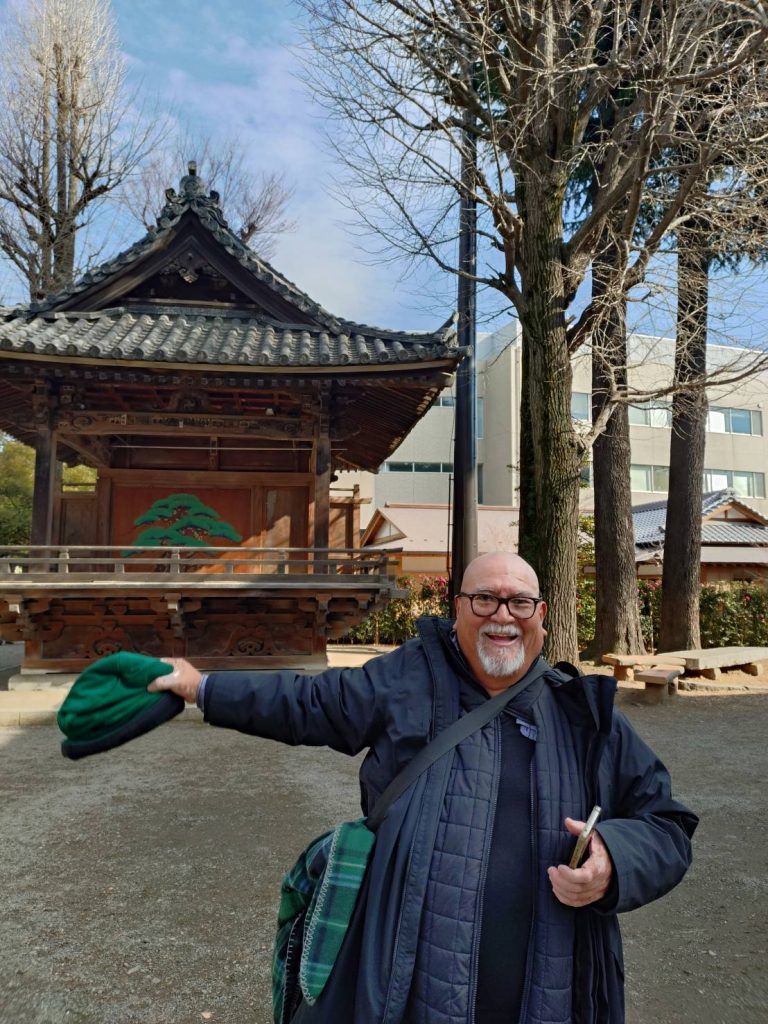
After admiring the roof for a while, he took off his hat, clapped softly, and exclaimed, “Bravo!”—clearly delighted.
Once again, Mario’s fresh overseas perspective reminded us how special the everyday scenery we often overlook can be.
“The walk from the torii gate to the main hall is beautiful,” he said.
“It calms the heart. I feel like I can even hear my own heartbeat.”
Looks like it was a good thing we didn’t turn back at the torii, right, Mario?
Learning How to Ride a Bus in Tokyo
After leaving the shrine, we decided to head to Ueno by bus—another new experience for Mario.
While checking the bus stop location on our phones, a bus happened to pass by. Mario immediately raised his hand and stepped toward the road, trying to stop it and hop on!
“No, no, Mario—you can only board the bus at a bus stop!”
“What? Really?” he laughed.
“In Argentina, we just raise our hand and jump on a moving bus!”
That does sound exciting… but maybe a bit too exciting.
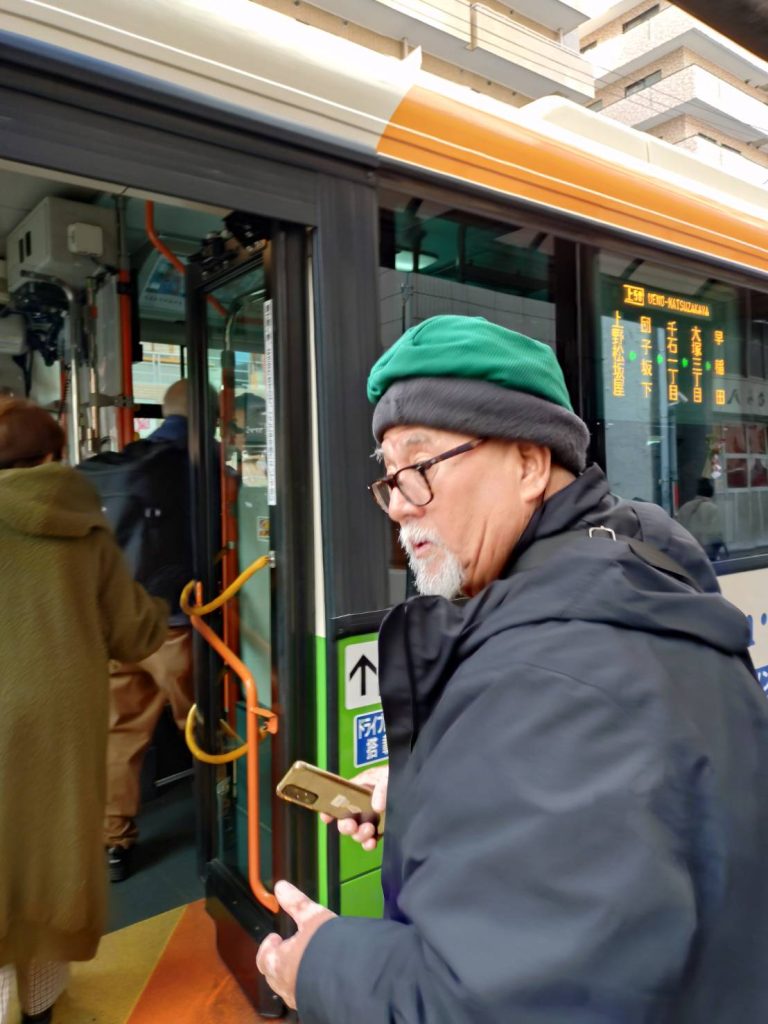
Eventually, we walked to the proper bus stop, and Mario boarded the bus the “official” way.
As soon as he got on, he positioned himself next to the driver and started asking questions.
“The driver’s seat looks so open—how about security?”
“And the money is exchanged so openly. Is that safe?”
Honestly, talking to the driver might be the most dangerous part—but let’s not say that out loud.
“The bus waits until everyone is seated before moving, and it’s so clean. Amazing!”
For Mario, another surprising discovery.
For us, one of the most nerve-wracking bus rides we’ve ever had.
Unexpected Discoveries in Everyday Tokyo
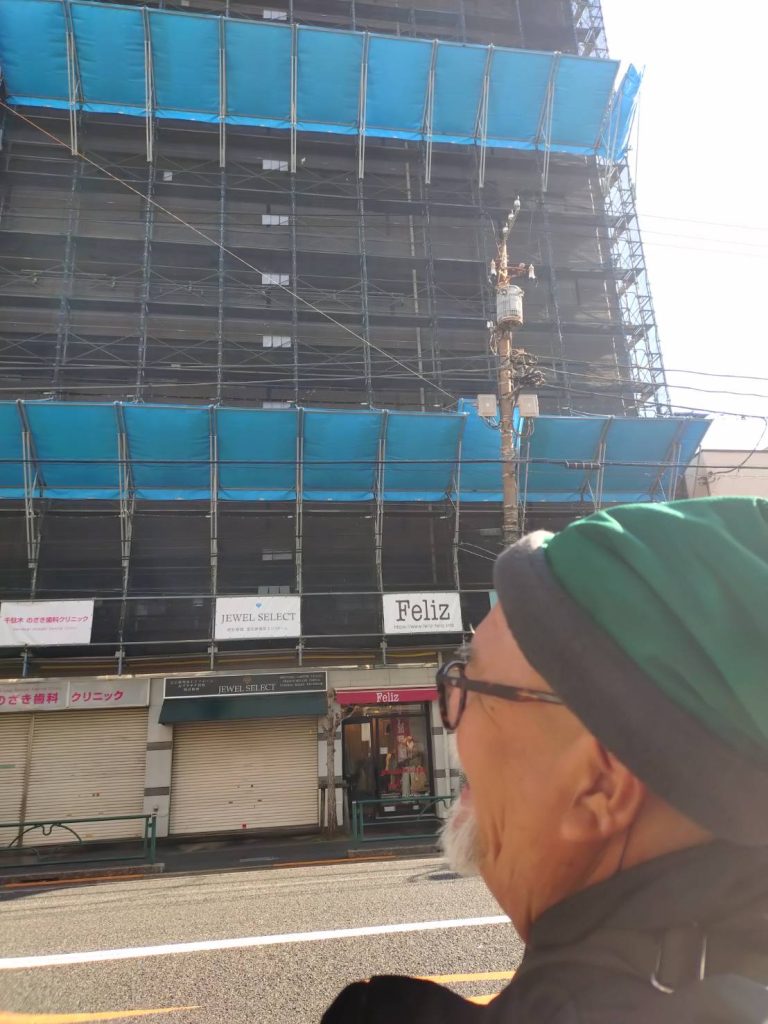
Along the way, Mario suddenly stopped in front of a construction site.
“What did you notice this time?” we asked.
“It looks very safe, but when everything is completely covered, it takes away the fun,” he said thoughtfully.
He then focused on the signboards displaying the construction schedule and purpose.
“I see—everything is planned so precisely. Very Japanese. In Argentina, schedules are usually… approximate.”
Mario was curious about everything—even pedestrians.
“Why do people naturally move aside and avoid bumping into each other?”
“Do they somehow see a little into the future?”
No, Mario—they’re just being considerate and moving out of your way first.
“That’s very natural,” he nodded.
“Ah… then thank you. I feel a bit bad now.”
Finding Calm at Shinobazu Pond in Ueno
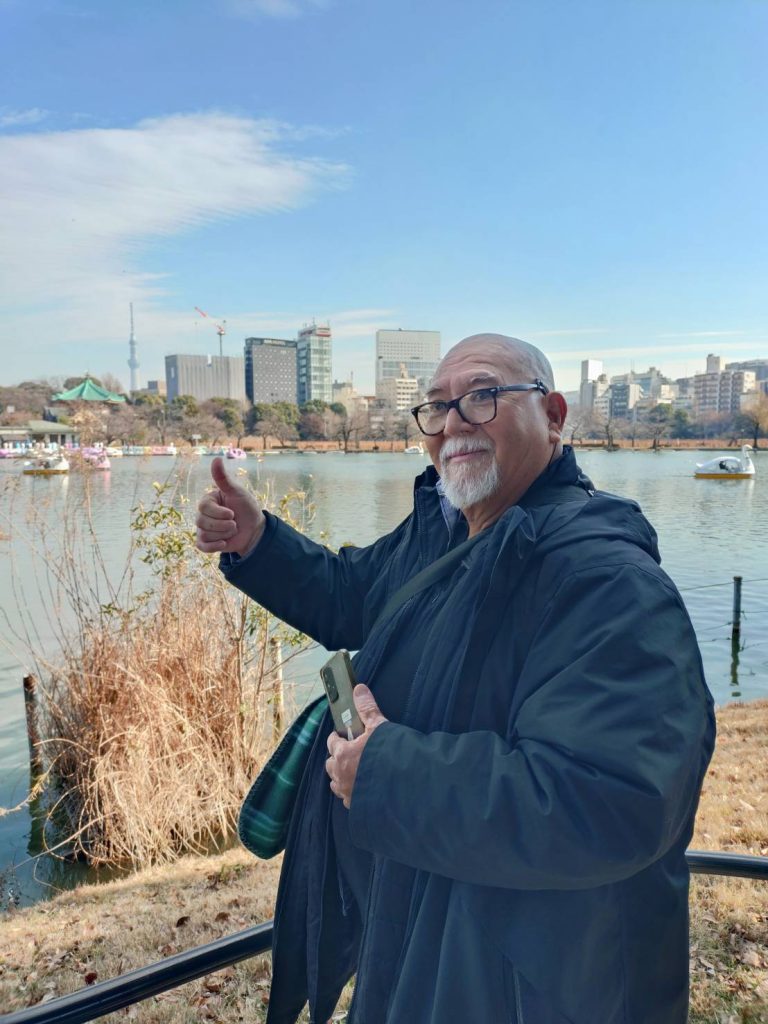
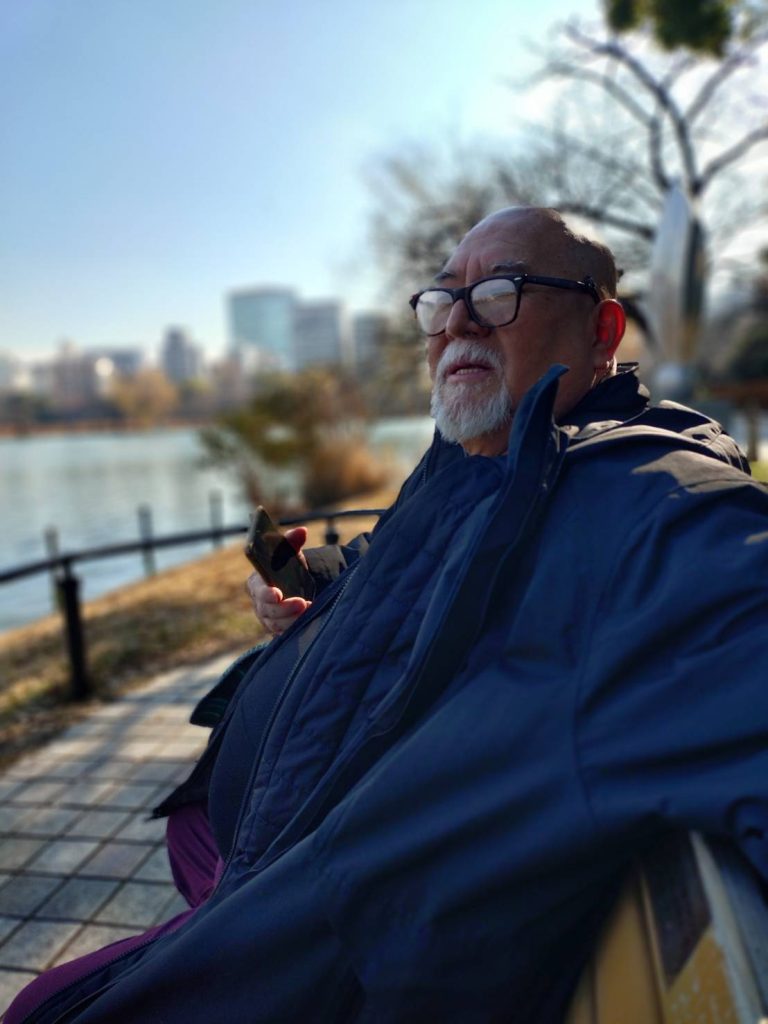
When we finally reached Shinobazu Pond, Mario sat down on a bench, took a deep breath, and quietly blended into the scenery.
“How do you like it?”
“This pond looks even more beautiful because of the skyscrapers around it,” he said.
“The pond must have existed long before the buildings. It was beautiful back then too—but being surrounded by modern buildings makes it stand out even more.”
A poet, indeed.
Mario sat in silence for a while, gazing at the view.
Watching him express what he sees so honestly and generously made me feel a little ashamed of how often I rely on assumptions and common sense. It reminded me of the true joy of traveling to an unfamiliar country—seeing everything with fresh eyes.
After staying at Sakura Hotel Nippori for nearly three weeks, Mario would return to Argentina the next day. We can only hope that his time in Tokyo became a cherished memory—something he could never fully experience back home, or even by simply watching videos about Japan online.
Please come back to Tokyo, and to Sakura Hotel, anytime.
And next time, don’t hesitate to take us along on your adventures again!
With love from your Tokyo family,
The Sakura Hotel Staff
Written by
Daisuke Okubo
If you haven’t read the first part yet,
👉 start here: Walking Yanaka Ginza with Our Guest from Argentina